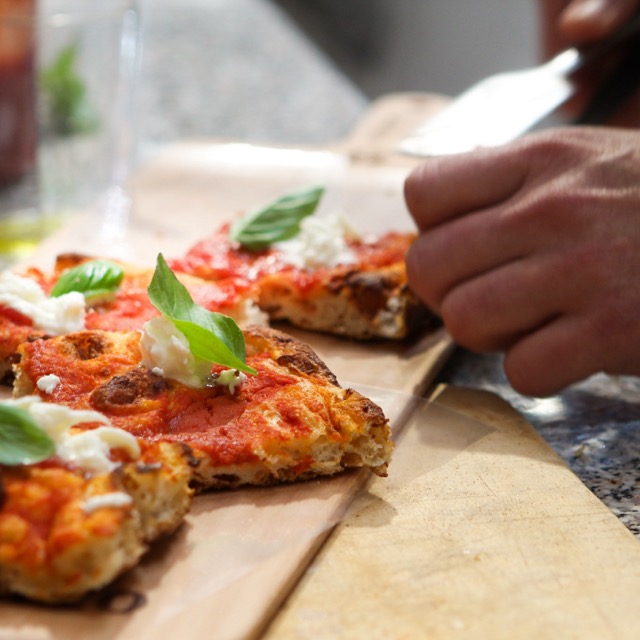
What Makes Italian Pizza Crust Special?
The Italian pizza crust is known for its distinctive texture and structure. Unlike thicker styles, the authentic Italian crust focuses on balance: it should feel light, crisp, and easy to digest while still providing enough structure to hold toppings.
Key characteristics of Italian pizza crust
A traditional Italian pizza crust is typically:
- thin and light
- crispy on the outside
- slightly chewy in the center
- aromatic and well-developed thanks to fermentation
- golden with small charred spots when baked at high temperature
Italian Crust vs other pizza styles
To better understand its uniqueness, it’s helpful to compare Italian pizza crust to other popular styles:
-
Deep dish pizza: thick, buttery crust with a heavy, pie-like structure.
-
Pan pizza: soft and airy crumb, usually thicker with a fried bottom.
-
Stuffed crust: enriched and dense, designed for extra filling.
-
Italian thin crust pizza: crisp, light, and focused on dough maturity and baking quality.
For professionals, the challenge is always the same: achieving the perfect balance between crunch, softness, and flexibility without drying out the dough or losing structure.
Key Ingredients for Crafting the Perfect Italian Pizza Crust Dough
A successful Italian pizza crust dough recipe is built on simple ingredients, but quality and precision make the difference between average pizza and premium results.
Essential ingredients
- High-protein flour
- Water
- Yeast
- Salt
- Olive oil (optional, depending on style)
The role of each ingredient
High-protein flour
Flour is the most important ingredient for thin crust pizza dough. It affects:
- gluten development
- elasticity and extensibility
- fermentation tolerance
- crust crispiness and texture
A professional-grade flour with stable protein content ensures consistent results, especially in high-volume production.
Water
Water controls hydration and impacts dough softness. The right hydration helps create a dough that is easy to stretch and bakes into a thin, crisp base.
Yeast
Yeast is responsible for fermentation and gas production. Slow fermentation enhances aroma and digestibility, creating a more authentic Italian pizza experience.
Salt
Salt strengthens gluten, controls fermentation speed, and improves flavor.
Olive oil (optional)
A small amount of olive oil can increase softness and aroma while helping achieve a golden crust. Many professionals add it when aiming for extra crispness.
Why premium flour matters
Professional kitchens require reliability. Using high-quality flour, such as Molino Rachello professional pizza flours, helps ensure:
- consistent dough behavior
- stable fermentation performance
- better oven spring and crust development
How to make Italian Pizza crust dough
Below is a step-by-step professional method to prepare thin crust Italian pizza dough.
Mixing the Ingredients
Start by pouring water into a mixing bowl and dissolving the yeast. Add flour gradually while mixing at low speed until a rough dough begins to form.
Once the flour is mostly incorporated, add salt and continue mixing until the dough becomes more uniform.
Kneading the Dough
Kneading is essential for developing gluten structure, especially in thin crust pizza dough where elasticity and strength must be balanced.
Knead until the dough is:
- smooth
- elastic
- firm but still flexible
Fermentation: Letting the Dough Rise
Fermentation is one of the most important steps for flavor and texture.
Allow the dough to ferment slowly, either:
- at room temperature for shorter production cycles
- or in cold fermentation (refrigeration) for deeper flavor and improved digestibility
Recommended professional approach:
Cold fermentation for 24 hours is widely used to create an aromatic, crisp crust with better structure.
Fermentation improves:
- aroma and taste
- crust crispiness
- dough extensibility
Shaping the Dough
Once fermented, divide the dough into portions and shape into dough balls. Allow them to relax before stretching.
Stretch the dough by hand, pressing gently from the center outward while preserving the air in the outer edge.
Resting the Dough
Resting is crucial to avoid dough shrinkage and improve stretchability.
Let the dough rest:
- after balling
- and again after the first stretch if it resists shaping
Resting allows gluten to relax, ensuring the dough stretches evenly without tearing.
Baking the Crust
To achieve the signature Italian thin crust pizza, high temperature is essential.
Professional ovens typically bake Italian pizza at:
- 350–450°C (662–842°F) depending on oven type
- baking time: 90 seconds to 4 minutes
A proper bake should produce:
- a crisp base
- golden edges
- balanced texture without excessive dryness
How to customize your pizza crust for different styles
One of the advantages of Italian pizza dough is its adaptability. By adjusting hydration, fermentation time, and flour strength, professionals can tailor the crust to different customer preferences.
Adjusting dough for texture and flavor
- For a crunchier crust: slightly lower hydration, longer bake, stronger flour
- For a softer interior: higher hydration, shorter bake, longer fermentation
- For extra aroma: longer cold fermentation and reduced yeast
How toppings affect crust performance
Heavy toppings (cheese blends, sauces, vegetables) can increase moisture and reduce crispiness. Professionals often adjust:
- dough thickness
- bake time
- oven temperature
Professional advice for menu flexibility
Restaurants can use one base dough recipe and create multiple styles by controlling:
- proofing time
- stretching thickness
- baking technique
This allows for a wider menu offer without disrupting production.
Perfecting Your Italian Pizza: tips for professionals
In a professional environment, consistency and workflow efficiency are just as important as taste.
Professional tips for better results
- Use a pizza stone or deck oven to improve bottom crispness
- Monitor dough temperature during fermentation to avoid overproofing
- Standardize dough ball weight for consistent pizza sizing
- Control humidity and flour absorption based on seasonal changes
- Use high-quality olive oil for improved aroma and golden crust
Maintaining consistency in busy kitchens
In high-volume production, dough management is critical. Proper scheduling of fermentation and proofing ensures:
- less waste
- better product consistency
- smoother service operations
Using seasonal ingredients without compromising dough quality
Seasonal toppings can elevate your menu, but professionals should balance moisture levels. For example:
- pre-roast vegetables
- drain fresh mozzarella properly
- add fresh herbs after baking
This preserves crispness while enhancing flavor.
Choose Molino Rachello Flours for your products
To achieve authentic Italian pizza crust quality, flour selection must meet professional standards. Molino Rachello flours are developed to support modern pizza production while respecting Italian tradition.
Why professionals choose Molino Rachello flours
Molino Rachello offers flours designed for:
- stable gluten development
- high performance fermentation
- consistent elasticity and extensibility
- reliable results across different ovens and workflows
Thanks to their quality-focused milling process and raw material selection, Molino Rachello flours help professionals create thin crust pizza dough that is easy to handle and delivers excellent baking performance.
Whether you are producing classic Italian pizza, gourmet variations, or high-volume menu production, Molino Rachello flours provide the consistency needed for premium results.